
Branding
City dwellers in their thirties dream of ranches. Not penthouses.
Cowboy aesthetics are the new luxury code of urban class

Jean Eude
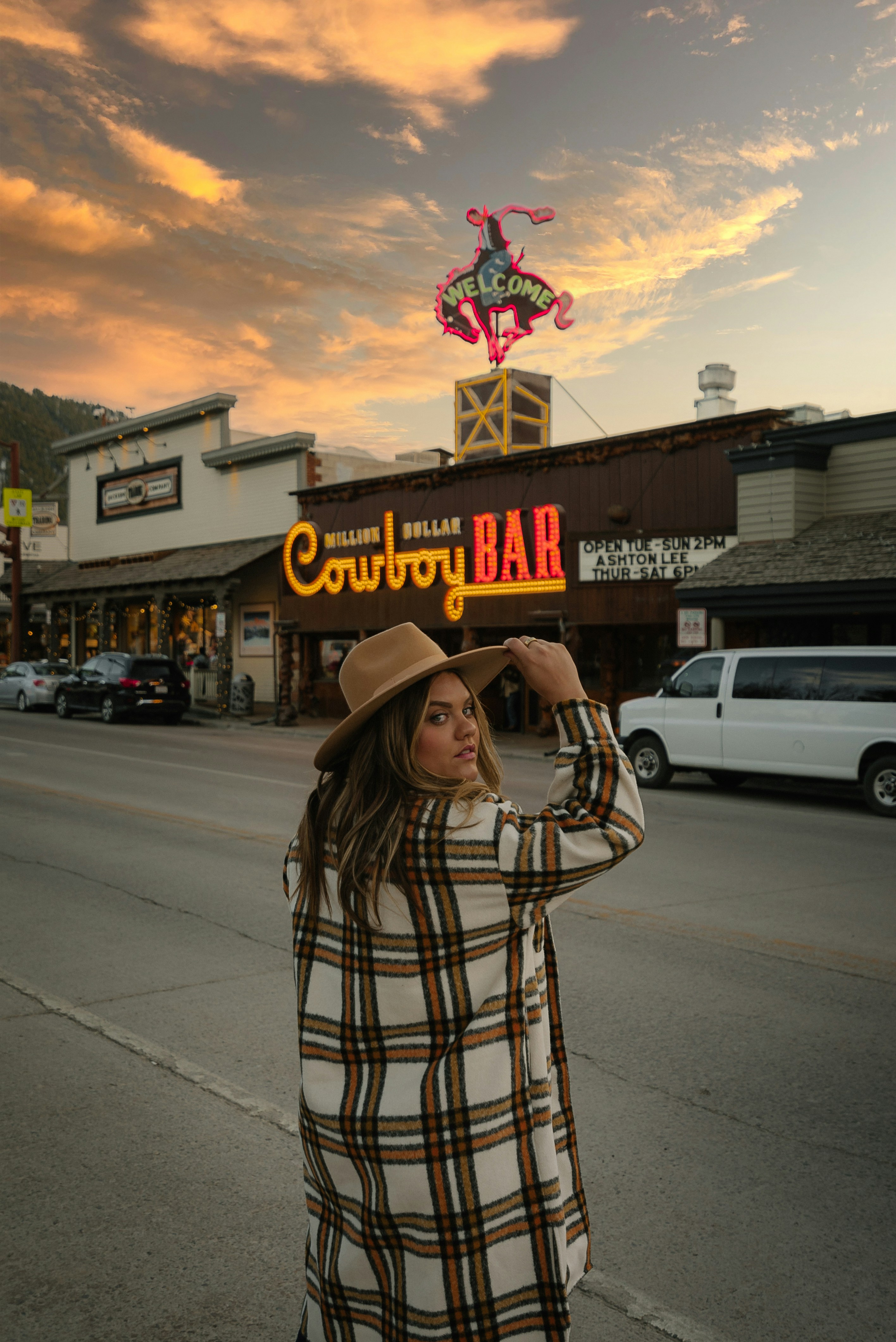
Fifteen years ago, if you walked into a five-star hotel in Manhattan wearing a Coors Light t-shirt, a trucker cap, and dusty cowboy boots, the concierge would have politely asked if you were lost. Today, that same outfit would be interpreted, correctly, as a fashion statement worth an estimated $2,400.
The Coors t-shirt is vintage, sourced from a Depop reseller in Austin, and retails for $300. The trucker cap is a nick fouquet creation. The boots are handmade Lucchese, aged deliberately to look like they've walked the King Ranch. And the entire look is the current uniform of a specific and growing demographic: young men and women in Brooklyn, Copenhagen, Los Angeles, and Montréal who have decided that the cultural codes of the American West are now the codes of the good life.
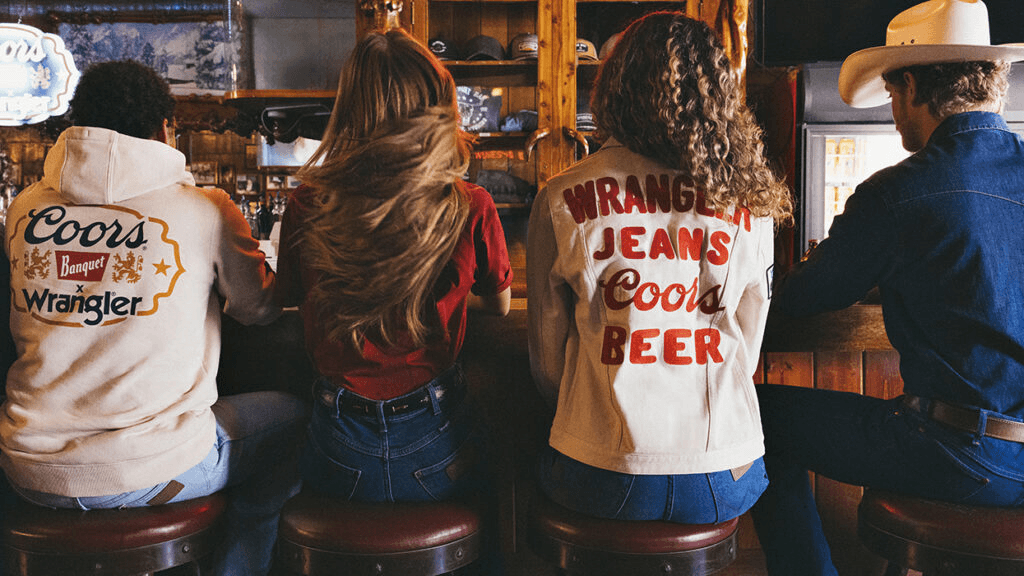
Something significant has shifted. The cowboy imagery. For most of the twentieth century a symbol of rural whiteness, working-class labor, political conservatism, and cultural distance from the coastal elite, has become an aspirational icon of a new kind of luxury. The cowboy has moved from costume into ideology.
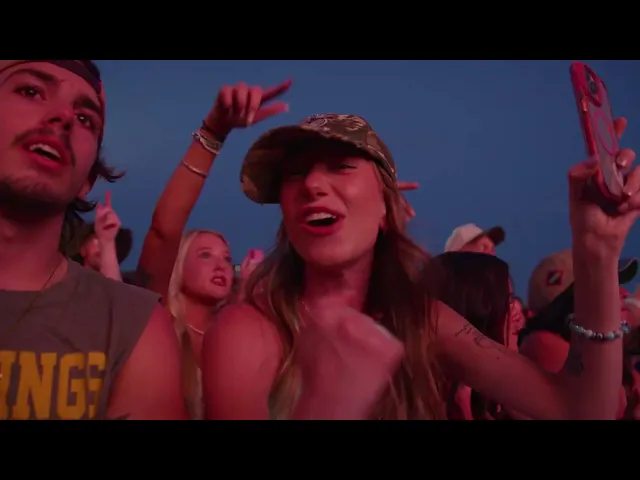
On a Saturday night in August, sixty thousand people gathered at Parc Jean-Drapeau in Montréal for the Lasso festival. Dozens of Ford Broncos most of them owned by twenty-eight-year-old marketing associates and freelance graphic designers who live on Rue Rachel and have never operated a tractor in their lives. The girls wore Santiag boots with denim mini-shorts. The boys wore vintage Coors t-shirts and Ariat caps.
Two hours west, in the small town of Saint-Tite, the last edition of the Festival Western was drawing more than 600,000 visitors over ten days. What used to be a regional gathering for rural Québec has become a pilgrimage for a specific demographic: young urban professionals from Montréal, Québec City, and increasingly Toronto and New York, who arrive in convoys of pickup trucks and spend a weekend performing a life they do not live.
This is the paradox that gives the current cowboy revival its shape. The people wearing the boots do not live on ranches. The people driving the Broncos do not haul cattle. The girls in Santiag are shopping on La Brea in Los Angeles, not walking pastures in Montana. What we are watching is not the return of rural life. It is the urban citation of rural codes. A specific cultural performance in which the affluent city-dweller borrows the visual vocabulary of a life they will never actually live.
How we got here: the anthropology of a symbol
Every symbol in a culture carries what the anthropologist Grant McCracken called a stored meaning: a set of associations built up over decades that determines how the symbol is read. Symbols are stable until they are not. When the underlying anxieties of a society shift, the stored meaning inverts. What was low becomes high. What was tacky becomes tasteful. What was mocked becomes coveted. The cowboy is a textbook case of this inversion.
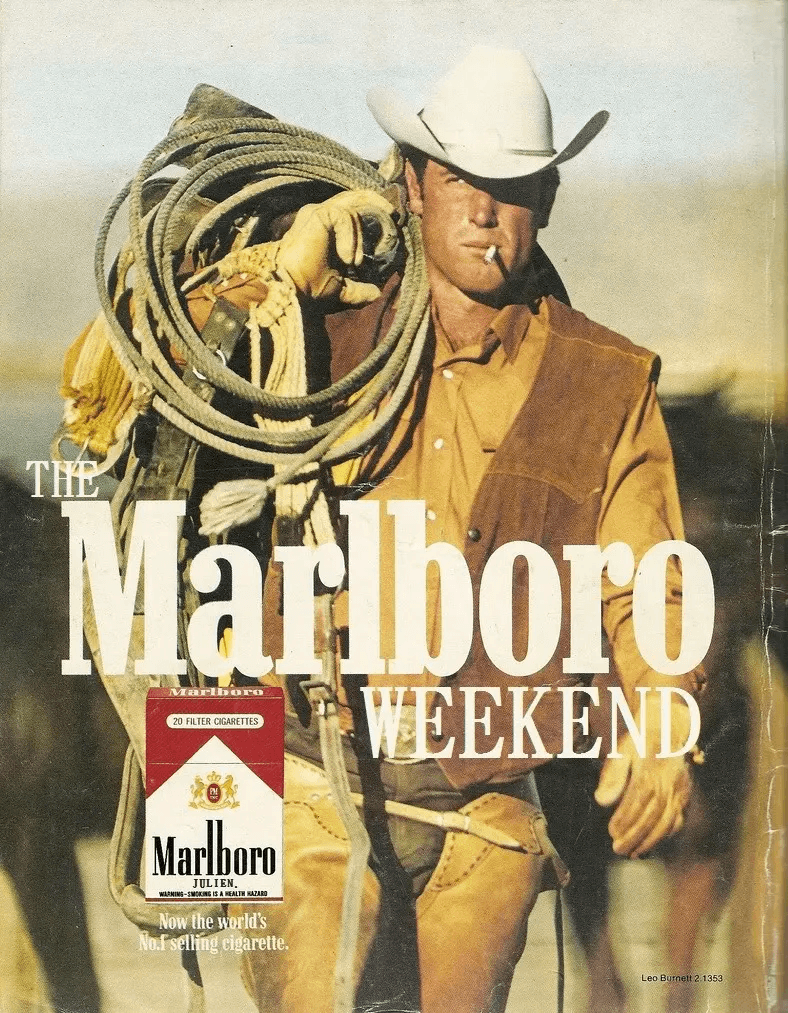
For most of the postwar period, the American cowboy carried a mixed but ultimately declining set of meanings. In the 1950s and 1960s, he was a heroic figure: John Wayne, Marlboro Man, cold war masculinity personified.
By the 1970s and 1980s, the ground had shifted under him. America was moving into a new era of consumer technology, the television in every living room, the video arcade at the mall, the Walkman in every teenager's ears, and soon the mobile phone in every pocket.
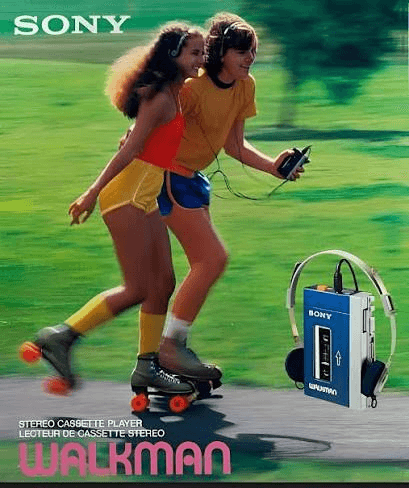
Modernity had a new grammar, and the cowboy was not part of it. He became associated with rural whiteness, blue-collar labor, Republican politics, and a specific kind of geographic and cultural marginality. Urban America began to code cowboys as unsophisticated.
Pierre Bourdieu, would have recognized this immediately. His argument was that taste is never neutral, it is a social weapon, deployed by the dominant classes to mark their distance from the dominated ones. The urban educated class of the late twentieth century used the codes of the cowboy as a negative signifier: a way of saying we are not those people. It was one of the cleanest examples of cultural distinction in modern America.
What changed?
Four overlapping things.
The retreat from technology.
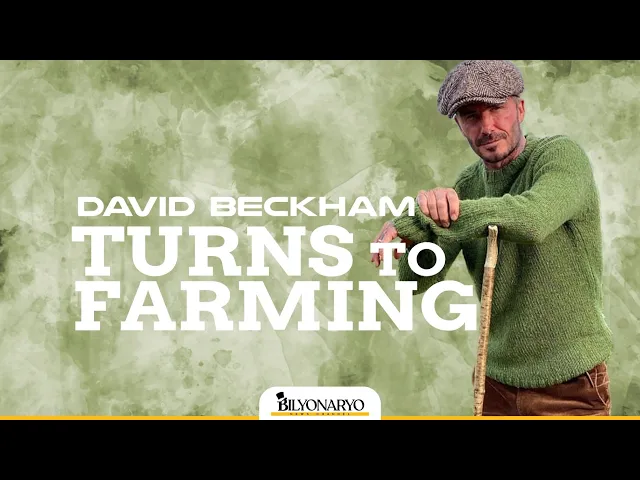
After twenty years of Silicon Valley optimism, the tech industry has become, for a significant portion of the cultural elite, a symbol of overwork, surveillance, and a hollow relationship to the physical world. The historian Fred Turner has traced how the counterculture of the 1960s got absorbed into the tech utopianism of the 1990s and 2000s. What we are watching now is that trajectory reversing. The people who built the tech economy are increasingly the people buying land in Montana, keeping chickens, learning to shoe horses. A software engineer with a Peloton looked aspirational in 2019. A software engineer with a small cattle operation in Colorado looks aspirational in 2027. The values embodied in the cowboy (physical work, connection to land, distance from screens) have become premium precisely because they are what the digital economy destroyed.
A good example is the shift into David Beckhams personal branding
The collapse of the urban prestige monopoly.
For most of the postwar era, the highest-status life in America was lived in a small number of coastal cities: New York, Los Angeles, San Francisco. Money, culture, and social capital concentrated there. Living rurally was, at best, a retirement plan. That model is breaking. Remote work, urban decline, housing costs, and the general fatigue of city life have redistributed prestige.
The aesthetic exhaustion of minimalism.
For twenty years, the visual grammar of luxury was clean lines, muted colors, sans-serif fonts, empty white rooms. Every DTC brand adopted it. Every Instagram aesthetic converged on the same beige-and-linen palette. When everyone owns the same aesthetic, it stops being a signal of status. The cowboy is the anti-minimalist. He is textured, layered, weathered, and specifically not clean. His clothes carry the marks of the work he did in them. This is what Sarah Thornton called subcultural capital, the value that accrues to symbols precisely because they resist the smoothness of mass consumption. The cowboy is rough. That roughness is now the hype.
The return of a badass adult archetype for a generation that outgrew the superhero.
For fifteen years, the dominant male hero of popular culture was Marvel. Iron Man, Captain America, Thor, the Avengers. The genre spoke to a specific age cohort: children and adolescents of the 2000s and 2010s who wanted to save the galaxy. That cohort is now between twenty-five and thirty-five. They have jobs, mortgages, dependents. And the fantasy of intergalactic combat no longer maps onto their lives. They do not need to save the galaxy. They need to save a marriage, a career, a small piece of land, a family that is scattering.
Enter Taylor Sheridan. His television empire: Yellowstone, 1883, 1923, Tulsa King, has produced the most successful sustained franchise on American television since The Sopranos. Its aggregate viewership across the Paramount ecosystem exceeds any Marvel property in the same window. The protagonists are cowboys, ranchers, oilmen, town mayors, aging hitmen. They fight with fists, contracts, pen and land deeds. They are anti-heroes with grown-up problems. They do not fly. They do not wear capes. They wear denim jackets, and they carry the exact weight of the responsibilities their age cohort is now carrying.
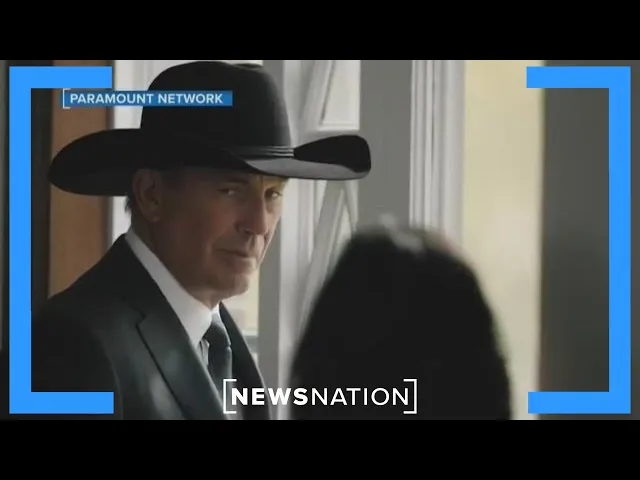
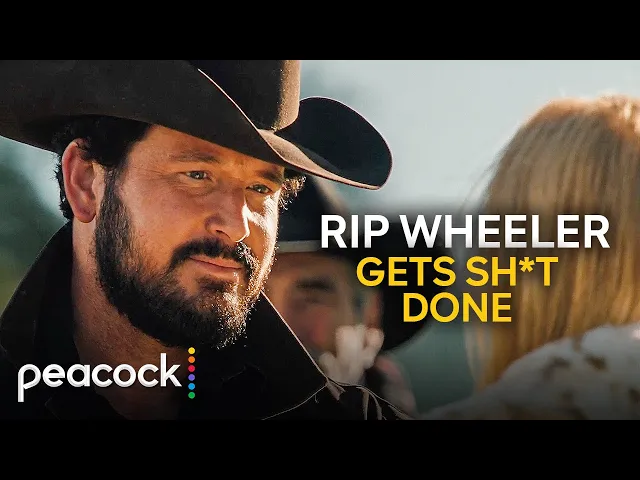
Sheridan's insight is anthropological, not just narrative. He understood before most of Hollywood that the millennial and elder Gen Z audience was aging out of the superhero and into something older, harder, more melancholy. His cowboy is not the John Wayne cowboy. It is a cowboy with debt, with divorces, with children who won't return calls. He is a hero for a generation that has stopped believing in salvation and started believing in stewardship. When Rip Wheeler puts on his hat in the morning, thirty million American men see a version of the adult they wish they could be competent, weathered, quietly authoritative, and rooted in a place.
Why now?
The temptation, when observing any cultural inversion, is to explain it as a fashion cycle. Everything comes back, a phrase my wife has been using against me for years, whenever I suggest her closet could use a purge (I’m joking, but yes, she really does say it.). Cowboys were cool in the seventies, they're cool again in the twenties, that's how it works. That explanation is partly right but completely insufficient.
Fashion cycles do happen, but they are surface. What is happening with the cowboy is not a return to a previous cycle. It is a fundamentally new synthesis, and it carries a set of values that were absent from previous cowboy revivals.
The Marlboro Man of the 1960s was about a certain image of American masculinity: solitary, weather-beaten, sovereign. The urban cowboy of the late 1970s and early 1980s, riding on the wave of the new western films, was about aspiration to blue-collar authenticity from a suburban middle class. The cowboy of the late 1990s Ralph Lauren empire was about heritage: the myth of an American nobility rooted in ranching families.
The cowboy of 2027 is none of these. He, and increasingly she, is about a specific set of values that speak directly to the anxieties of the affluent Western consumer:
a life where you know where your food comes from. Where your hands do something visible by the end of the day. Where your community is small and observable. Where technology serves the land rather than replacing it. Where wealth is expressed through slowness and location rather than speed and connectivity.
This is not nostalgia. Nostalgia is a longing for the past. What we are watching is the construction of a future ideal using imagery borrowed from an idealized past. The affluent consumer of 2027 does not actually want to be a nineteenth-century rancher. She wants to feel like she could be, on Sunday afternoon, and post about it Monday morning.
What changes for strategists?
The strategic implication, for anyone working on brand strategy in the luxury or premium space, is significant.
First: the visual monopoly of coastal minimalism is over. The aesthetics that defined luxury from 2005 to 2022 (clean, cold, urban, digital) are actively being counter-signaled. Brands that are still leaning into the old vocabulary look outdated.
Second: the codes of rural craft, physical labor, and pre-industrial authenticity are now premium. Weathering, hand-work, natural materials, imperfect finishes, small-batch production, geographic specificity: all of these are being read as high-status rather than low. Loewe under Jonathan Anderson understood this early. Bode built its entire business on this insight. Hermès never left it.
Third, and this is the strategic ground I want to name, there is a specific opportunity for brands that are geographically distinct from the American West to build their own version of this vocabulary. When we worked with Maison Préfontaine on their strategic foundations, this was the central move. Canada has its own version of rural mythology. These carry the same stored meaning as the American cowboy, but they are unclaimed. The brand needed to build a Northern Wild: a version of the same values (physical work, connection to land, weathering, craft) that spoke to a specifically northern aesthetic and geography.
That’s what Ford recently did for the bronco in Canada (with ambivalent success bit the explanation of that will need an other article)
Every culture has its own cowboy. Argentina has the gaucho. Australia has the drover. Iceland has its horsemen and its farm folklore. The strategic move, for a brand outside of the American West, is not to import the cowboy, it is to identify the local equivalent, and to build the visual and narrative vocabulary that gives it the same stored meaning the cowboy now carries.