
Communication
The lie at the heart of most brand campaigns.
Why insurance, home care and retirement marketing must stop overpromising, and how honesty is becoming the new differentiator.

Jean Eude

I was recently watching an insurance commercial. A grey-haired couple holds hands on a beach in Tulum. The waves are perfect. The light is golden. The voiceover, warm and reassuring, suggests that with the right retirement plan, this is what retirement looks like.
The ad never mentions that the woman in the shot is a paid actress. That the husband in real life, in that same demographic, has a one in two chance of dealing with a serious chronic illness before age seventy. That the average Canadian retires with $272,000 in savings, enough for about a decade of modest living, not a decade of Tulum.
This is the deal we have made as an industry. We sell the beach. The customer pays for the policy. Nobody talks about the gap.
I have been doing this work for a long time. I have written briefs that promised beaches. I have approved storyboards of grey-haired couples laughing in linen. I am not above this. None of us are. But I think the contract is breaking. And I think the brands that figure out why first will be the ones that matter in ten years.
The category of lies we all participate in
Retirement and life insurance.
Retirement is sold as adventure. Sun-drenched second homes, sailboats, grandchildren on Italian beaches. The reality, for most people, is closer to a slow renegotiation of what independence means, often complicated by health, by inflation, by family geography. Sun Life, Manulife, Desjardins, RBC… they all sell variations of the same myth. The category has decided, collectively, that reality is bad copy.
Home care and aging.
The ads show seniors gardening, laughing with caregivers, doing tai chi in the morning sun. The reality is that home care exists because someone can no longer manage a stairwell, a shower, a kitchen unaided. The dignity of home care is real and worth honoring. But selling it as a lifestyle upgrade rather than a thoughtful response to vulnerability is its own kind of erasure. We wrote a brand strategy for Bien Chez Soi precisely because the category was drowning in this lie, and the founder had the courage to ask for something more honest.
Mental health apps.
Calm, BetterHelp, Headspace. The promise is serenity. The clinical reality is that app-based mental health support is useful for mild anxiety, marginal for moderate depression, and inadequate for anything more serious. The marketing implies a meaningful intervention. The actual product is, for most users, a coping aid at best.
Buy-now-pay-later.
Klarna, Afterpay, Affirm, Sezzle. The ads show liberated young women laughing on shopping sprees. The reality is that 41% of BNPL users in a recent U.S. study made a late payment in the past year, and the demographic most exposed is exactly the one the campaigns target.
Weddings.
The category sells one perfect day. The reality is months of family negotiation, an average cost of $35,000 in Canada and rising, and a 40% divorce rate. The ad never shows the spreadsheet.
I could keep going. The pattern is the same across categories: a financial, emotional, or medical product is sold through a fantasy that the product cannot actually deliver. The brand does not lie outright. It just lets the customer believe the dream is the product.
Why we got here
This is not a story of bad people doing bad marketing. It is a story of incentive structures that reward fantasy over honesty.
Three of them, mainly.
First, the attention economy punishes nuance. A campaign that says "retirement is complicated and we can help you plan for the version of it you'll actually have" tests worse, in every focus group, than "this could be your beach."
Second, the people writing the briefs are usually not the people living the reality. Insurance briefs are written in offices, by people in their thirties and forties, for customers in their sixties and seventies. Home care briefs are written by able-bodied marketers for families navigating dementia. The empathy gap is structural. The strategist has never lived the situation she is selling against.
Third, and this is the uncomfortable one, clients ask for the lie. They request it explicitly. "We don't want anything too heavy." "Keep it aspirational." "Show the upside." The agency, wanting the renewal, complies. The lie is co-produced. Everyone involved is a professional. Nobody is a villain. And yet the work is dishonest.
The sociologist Eva Illouz, in Cold Intimacies, describes this as the rise of emotional capitalism, the commodification of feelings, where brands sell the emotional outcome they cannot actually produce, and the customer pays for the emotion regardless of whether the product delivers it.
Why overpromising is about to break
Three forces are eroding the foundation of overpromising at the same time.
The first is information asymmetry collapsing.
A customer evaluating a retirement product today has access to Reddit threads from actual retirees, TikTok creators in the same demographic talking openly about their finances, and AI tools that will summarize the actual lived reality of the category in thirty seconds. The fantasy ad lands on someone who has, increasingly, already seen the truth.
The second is generational.
Millennials and Gen Z have grown up with marketing as wallpaper. They are not gullible: they are saturated. They detect overpromising the way previous generations detected hard-sell. The categories that have understood this, Liquid Death, Oatly, Patagonia, Bombas, Allbirds in its early years, built brands on a different deal: we will tell you what this product actually does, in what limits, with what trade-offs. The trust premium is enormous.
The third is regulatory.
Class actions against fintech overpromising, FTC scrutiny of mental health app claims, ASA rulings against insurance ads in the UK, the legal floor under fantasy marketing is rising. The brands that don't adapt now will adapt under enforcement later.
What honesty looks like as strategy
Honest brand strategy is not depressing brand strategy. This is the mistake everyone in the industry makes when they hear this argument. They think the alternative to fantasy is misery, a grey-haired man crying in a hospital gown.
Honest strategy shows the reality and the support inside the reality. It says: this season of life is hard, and here is exactly what we do that makes it less hard. It trades aspiration for specificity. It trades meadows for mechanism.
The best example I can give is what we built for Bien Chez Soi. The category was selling autonomy as myth: happy seniors gardening. The brand had something honest to offer: a bienveillant, a single companion matched to the person, who stays the same week after week, chosen for both care needs and shared interests. We didn't sell independence. We sold the texture of being known. The category sells the lie that aging is optional. We sold the truth that aging is easier with a relationship that lasts. The campaign worked because customers recognized themselves in it.
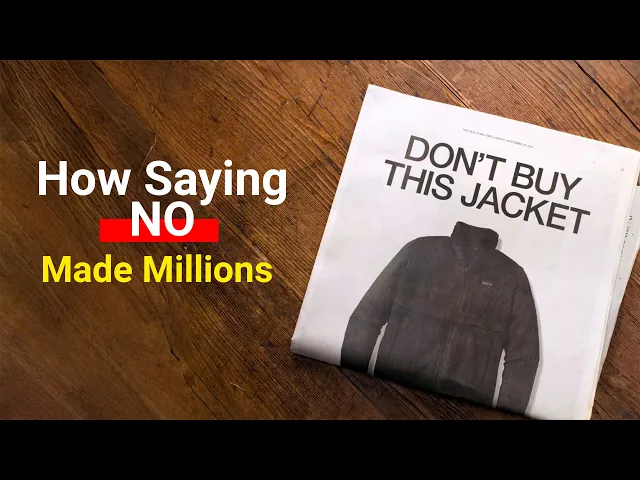
Patagonia did this for two decades before it became fashionable. "Don't buy this jacket." The ad ran in the New York Times in 2011. It told customers that buying things they didn't need was the actual problem, and that Patagonia was complicit. Sales went up.
Allbirds, in its early years, refused to claim performance benefits its shoes didn't deliver. The marketing was almost embarrassed: "They're just comfortable shoes made from wool." That restraint became the brand.
Honesty is not the absence of marketing. It is a more sophisticated form of it. It treats the customer as someone who can handle reality, and rewards that capacity. The brands that do this build a kind of trust that fantasy brands can never earn, because trust requires the possibility of disappointment, and fantasy categories have systematically removed that possibility from the relationship.
What this changes for strategists
The practical question, for strategists writing briefs today, is this: what is the lie at the heart of your category, and are you brave enough to refuse it?
In insurance, the lie is that the policy buys the beach. The truth is that the policy buys the absence of a worse outcome, which is a real and meaningful thing to sell. We just have to learn to sell it.
In home care, the lie is that aging is a lifestyle. The truth is that aging is a transition, and that being supported well through it is one of the most valuable things money can buy.
In retirement planning, the lie is that retirement is adventure. The truth is that retirement is a long, often beautiful, often hard renegotiation of self, and that financial planning makes it survivable.
In fertility, the lie is the meadow. The truth is that fertility care is rigorous, uncertain, emotionally expensive medicine, and that finding a clinic that treats you as a person rather than a chart is the actual differentiator.
The brand that names the truth of its category, gently, specifically, with real solutions inside the reality, will eat the brands still selling the meadow. Maybe not this quarter. Maybe not next year. But the gap is opening.